Robotics
Designing robotic cells around existing equipment
How to add robotics without disrupting the machines, workflows, and infrastructure already on your floor.

The design challenge
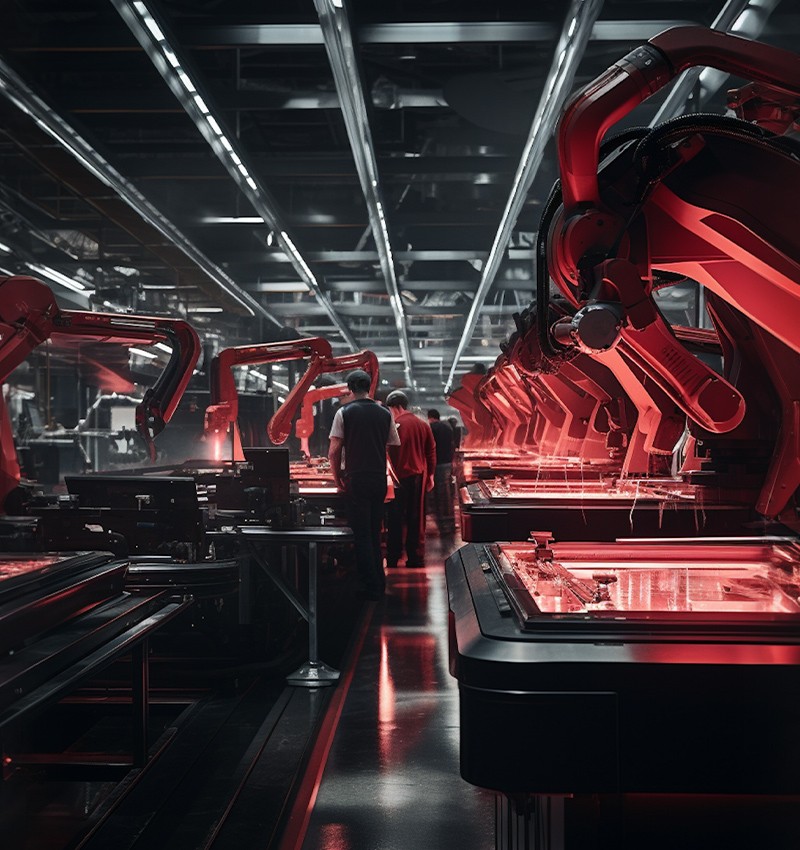
A robot rarely operates alone. It needs to work alongside machines, conveyors, sensors, tooling, operators, and safety systems.
The goal isn't to fit a robot into the factory. It's to make the entire process work better.
What we consider
Production flow
Where do parts enter the cell? Where do they leave? What happens before and after the robot?
Robot reach
The robot needs enough reach without creating unnecessary movement or compromising maintenance access.
Tooling
Grippers, vacuum systems, fixtures, and tool changers must match the parts and production requirements.
Safety
Guarding, access points, safety scanners, interlocks, and emergency systems need to be considered from the beginning.
A typical cell design
01 - Process assessment
02 - Cell layout
03 - Robot selection
04 - Tooling development
05 - Controls integration
06 - Testing & optimisation
Don't forget the operator
A highly automated cell still needs people.
Operators need to:
Load and unload materials
Respond to alarms
Perform changeovers
Access components
Carry out basic troubleshooting
Complete routine checks
Design principle
Simple to operate. Easy to maintain. Built around the actual process.